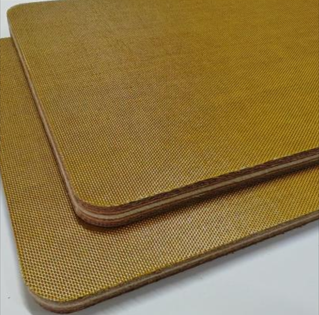
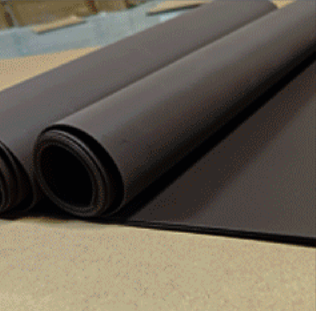
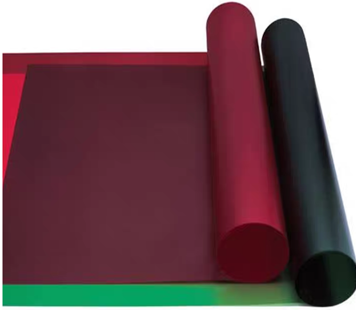
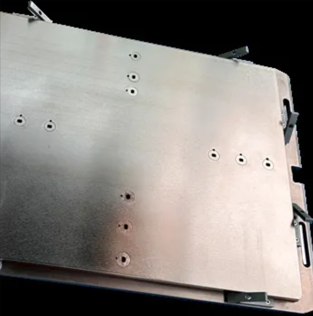
In the lamination process of PCBs and FPCs, the thickness of the Press Pad (Cushion Pad) is a critical variable that directly impacts product flatness, pressure uniformity, and the service life of your consumables. When selecting the ideal thickness, consider these three key factors:
High-Precision Multilayer Boards: For HDI boards with fine lines and high layer counts, a thicker modified silicone pad (e.g., 1.5mm - 2.0mm) is recommended. Thicker pads offer superior elastic compensation, ensuring pressure is distributed evenly into the gaps of inner-layer circuits to eliminate micro-voids.
Standard Double-Sided Boards: If the design is simple, a thickness of 0.8mm - 1.2mm is often sufficient to maximize thermal conductivity and shorten cycle times.
The press pad serves as both a buffer and a thermal resistor.
Increased Thickness: Provides better pressure distribution but slows down the heat transfer rate, which may require longer press cycles.
Decreased Thickness: Allows for faster temperature ramping and higher throughput, but requires extremely high flatness from the press hot plates.
Always verify the opening height of your lamination press and the specifications of your separator plates. We recommend maintaining a thickness tolerance within $\pm 0.1\text{mm}$ to ensure consistency across mass production batches.
Expert Tip: If you are unsure where to start, 1.6mm (approx. 63mil) is the industry "sweet spot" for testing. You can fine-tune from there based on the resin flow uniformity at the board edges.